Flexible, scalable UI
Iterative testing & validation
Stakeholder influence & alignment
End-to-end UX leadership
Project Snapshot
Role: UX Design lead
Scope: Web, iOS & Android slot booking experience
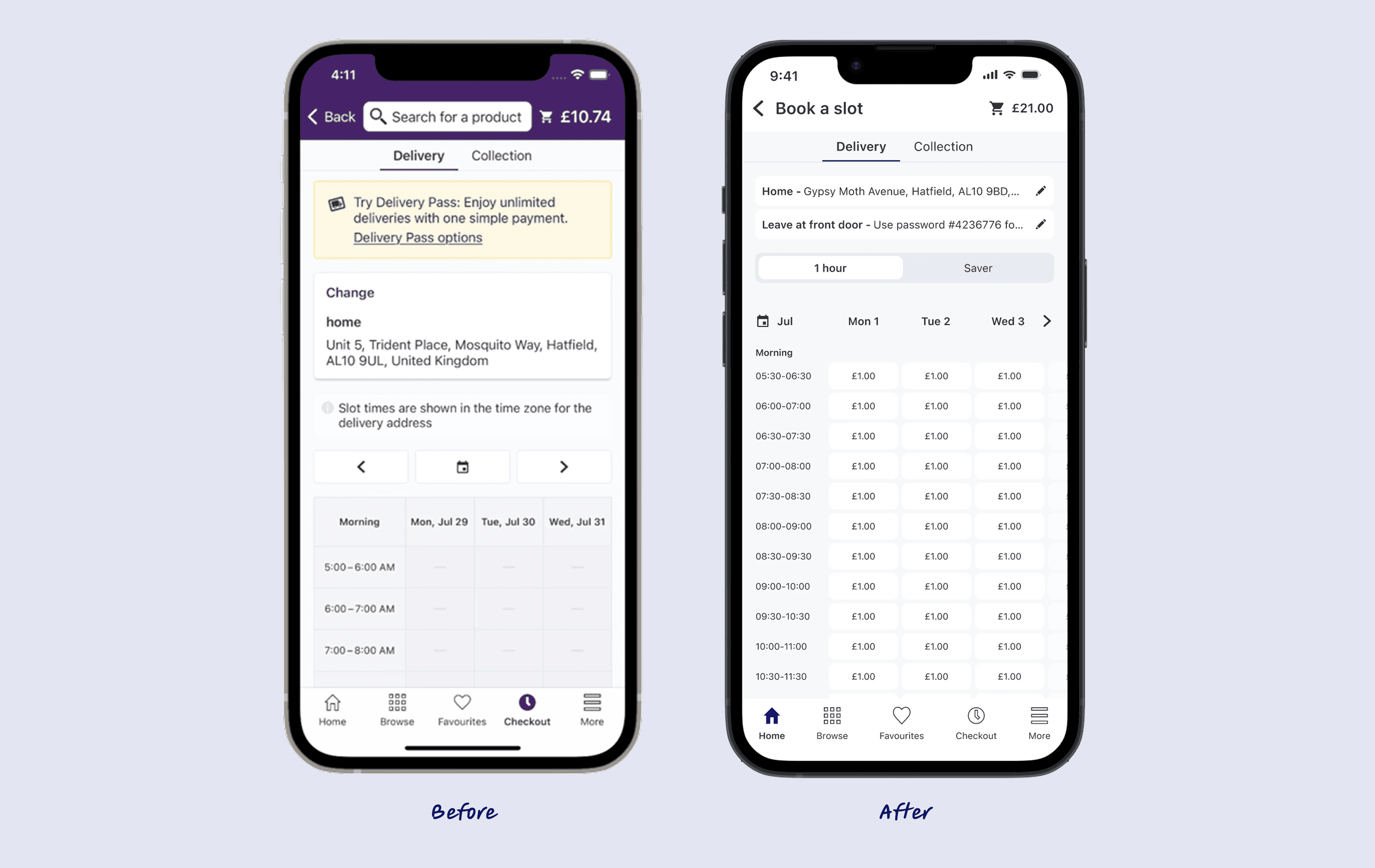
The slot booking page supports ~400k weekly grocery orders, making it one of the highest-impact steps in the checkout journey. However, the existing experience had become difficult to scale as new delivery options were introduced. Availability was hard to interpret, delivery propositions were unclear, and the UI had drifted from our updated design language.
I led a complete redesign of the slot booking experience, creating a scalable framework to clarify delivery options, support new fulfilment methods, and improve conversion while modernising the interface.
The goal was to establish a flexible, user-centric framework capable of presenting multiple delivery propositions (e.g. on-demand delivery, unattended delivery, external couriers, and variable slot lengths) without adding cognitive load.
Understanding the Problem
Earlier discovery work and user research identified the slot booking page as a key friction point in the ordering journey.
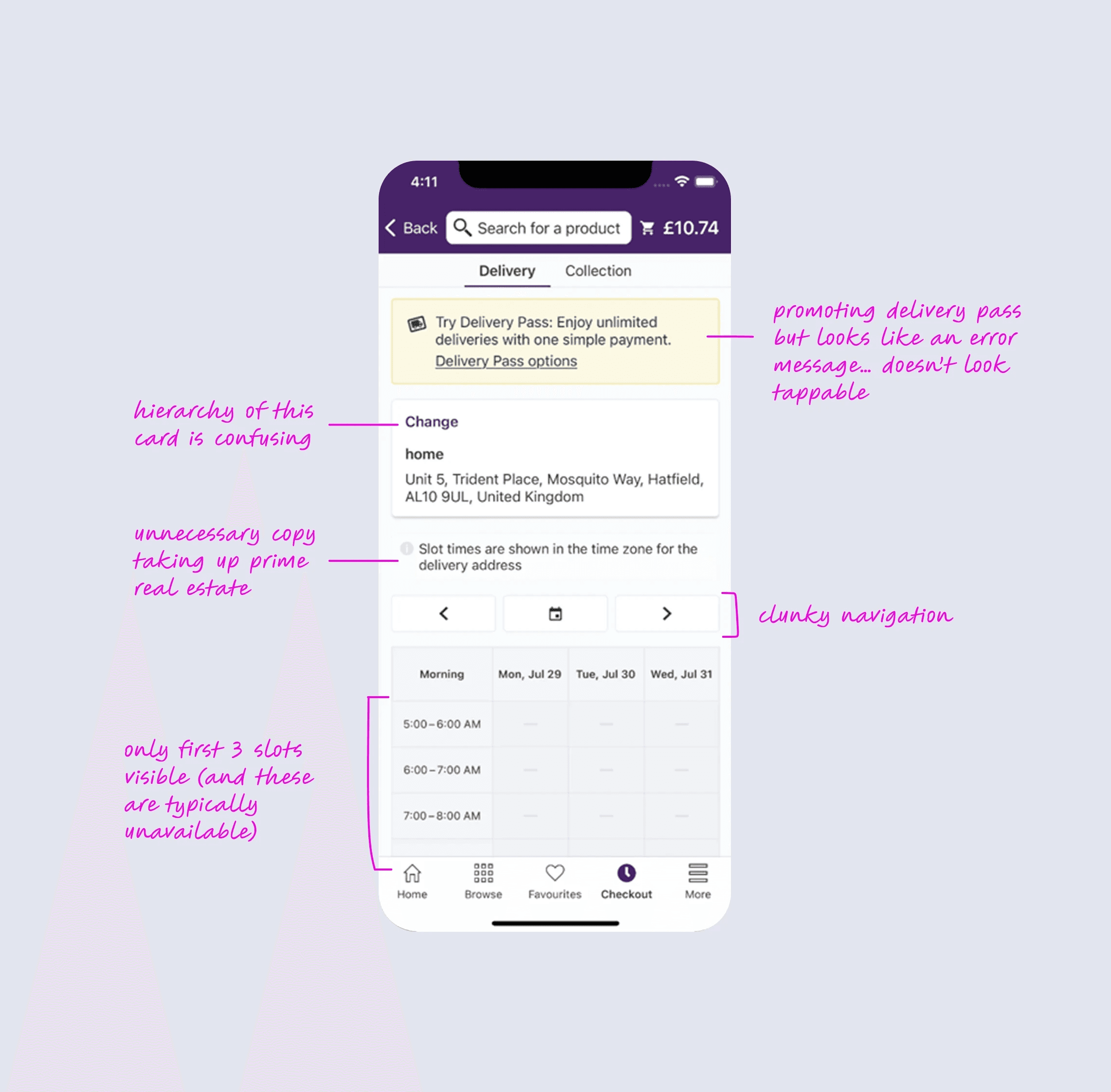
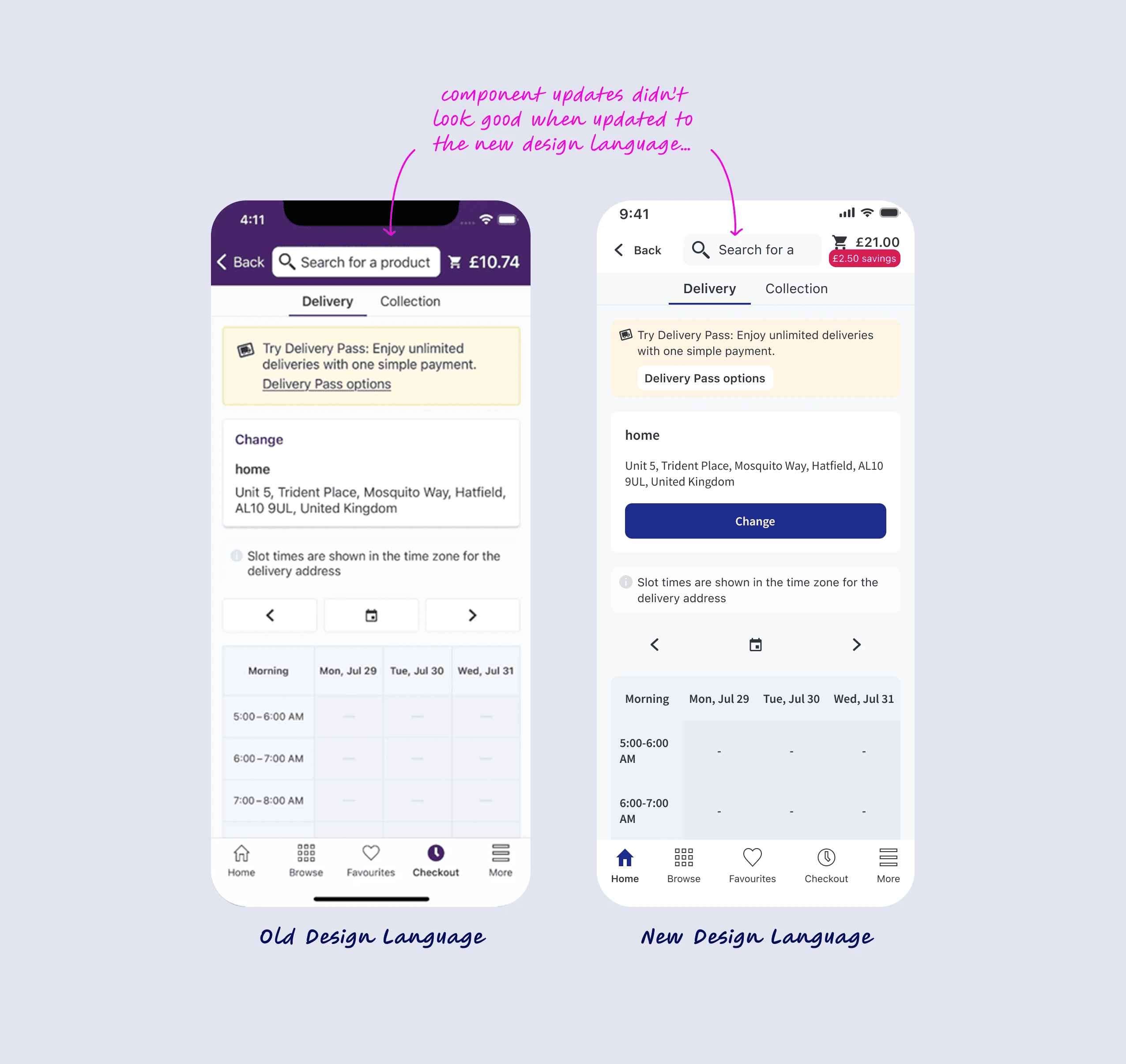
While users generally understood the booking flow, the interface itself caused confusion. Delivery options were difficult to interpret, and the rigid layout made it hard to introduce new functionality such as eco slots, longer delivery windows, or unattended delivery.
This reframed the challenge as a systems-level UI and information architecture problem, allowing us to focus on scalable solutions without altering the underlying flow.
Redesigning the Experience
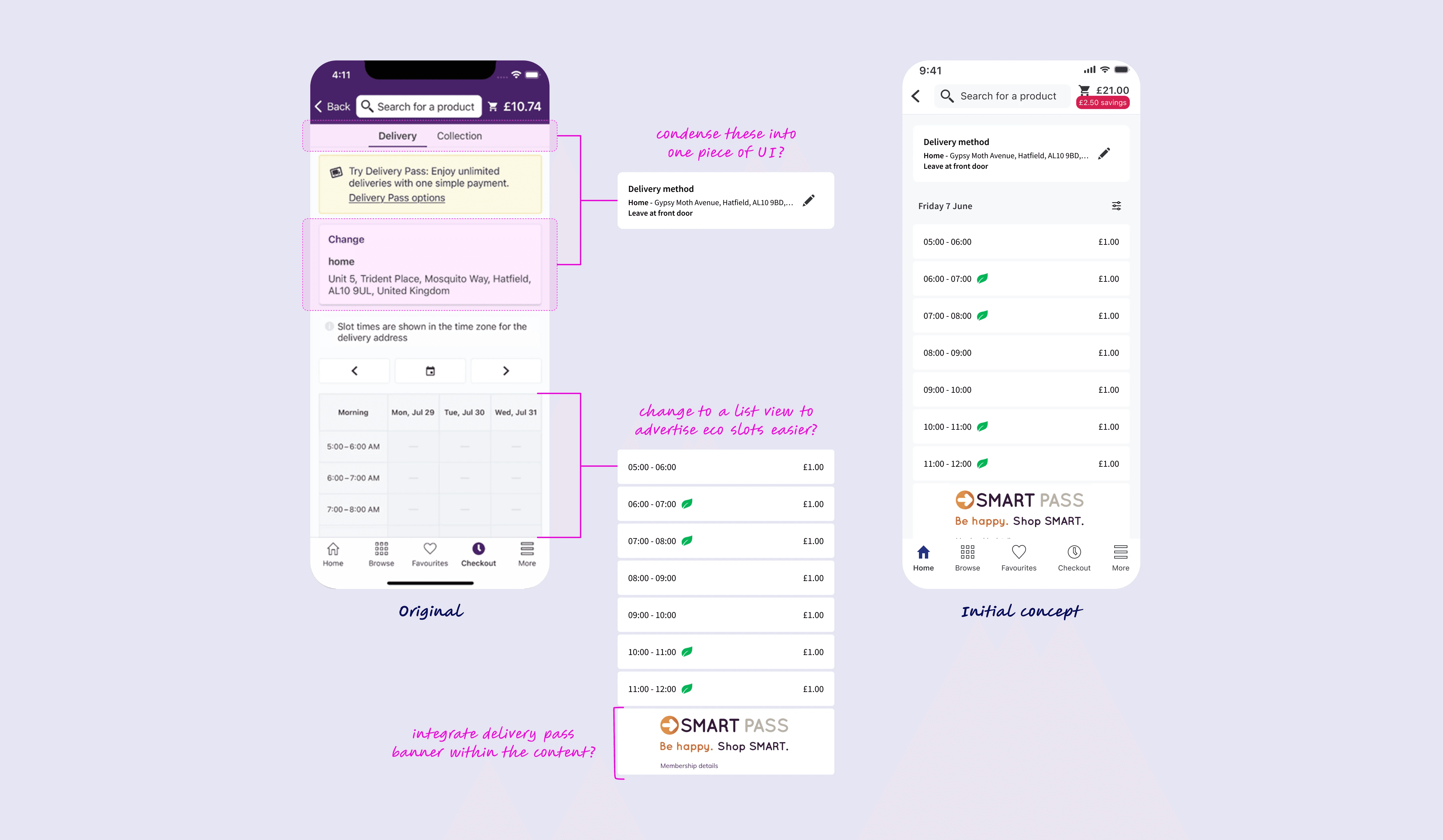
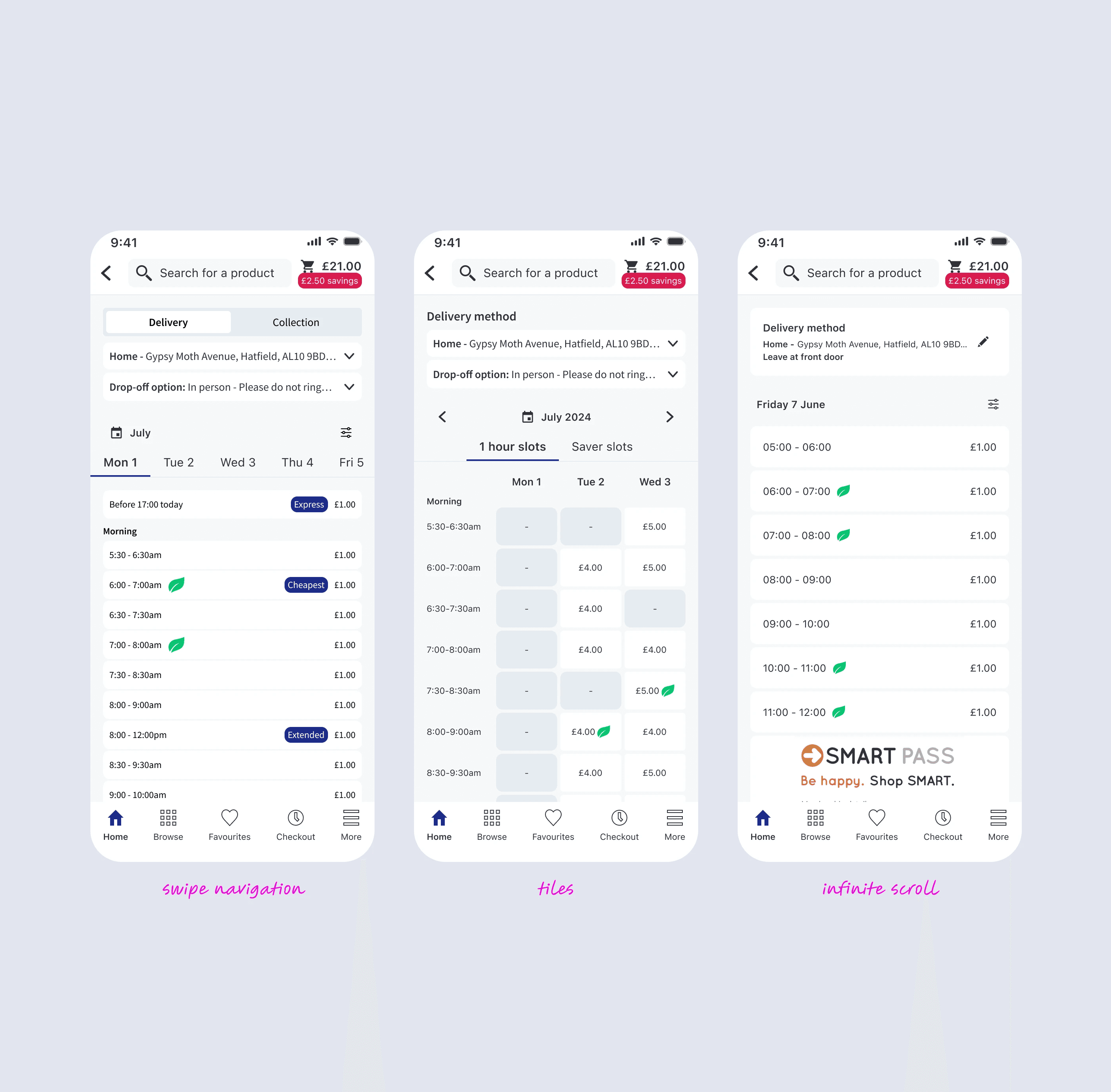
Several layout approaches were explored to improve slot discovery, including swipe navigation, tile-based browsing, and infinite scrolling. Through iterative design and validation, I selected a grid layout that maximised visible slots while maintaining familiarity for returning users, balancing usability, flexibility, and scalability.
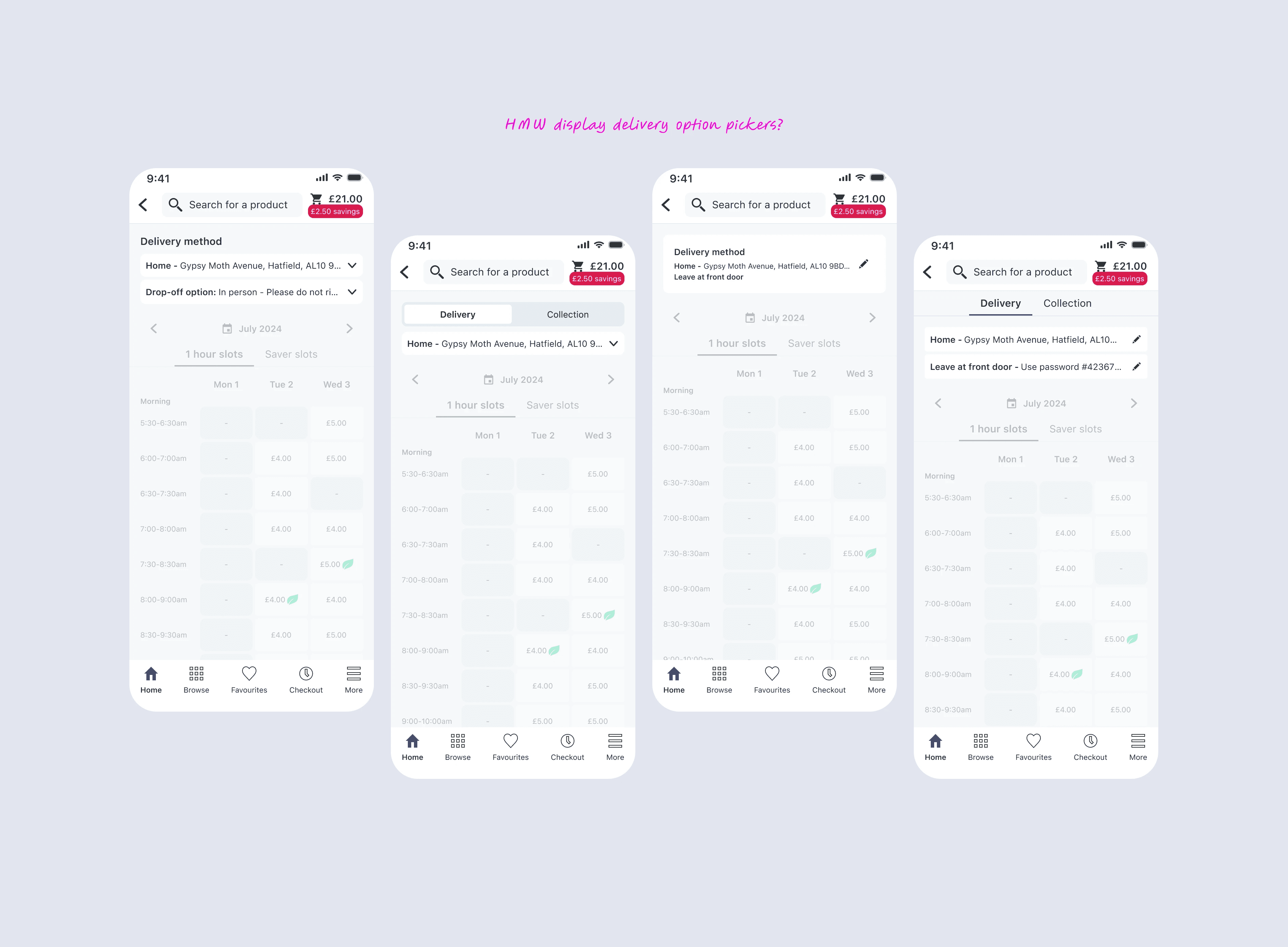
The redesigned experience also introduced clearer delivery option pickers, improved visual hierarchy, and a more flexible layout capable of accommodating future delivery propositions.
Testing & Validation
Due to the scale of the redesign, the experience was rolled out through staged A/B testing across multiple partners.
The first release launched as a 50% experiment, followed by further testing across partner markets. Insights from these experiments informed design refinements, ensuring that rollout decisions were data-driven and scalable across partner markets.

Key Improvements
The new booking experience introduced several structural improvements:
Improved slot visibility
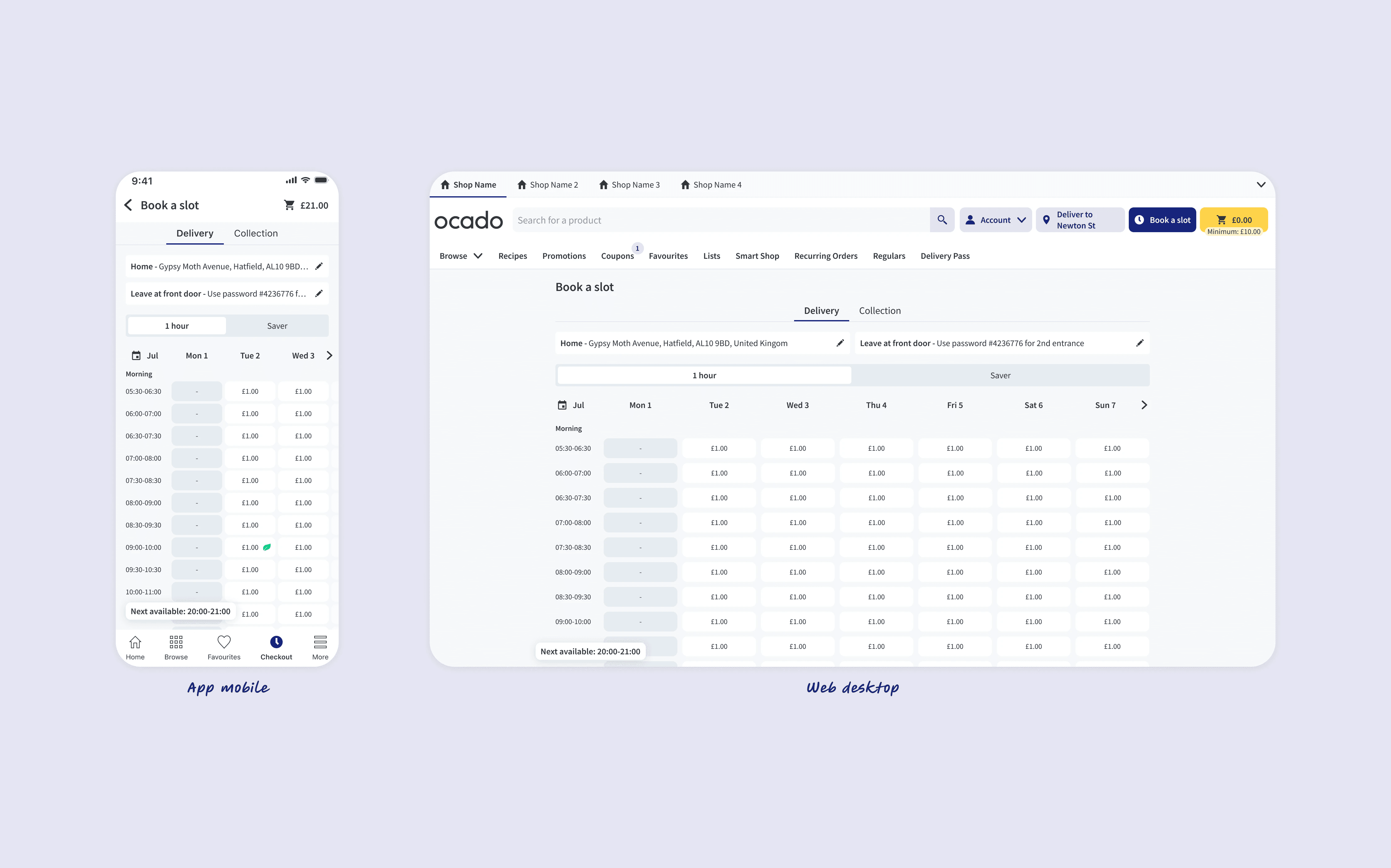
I prioritised showing more slots per screen to help users quickly assess availability across multiple days.Clearer delivery options
Delivery methods are presented consistently, making it easier to compare options.Faster slot discovery
I designed features such as “Next available slot” to minimise friction and speed up booking.Improved cost transparency
Mechanisms that reduce delivery costs (e.g. delivery passes, order thresholds) are surfaced more clearly.Modernised interface
The UI now aligns with the organisation’s design language, improving clarity across devices and creating a scalable design pattern.
Business Impact
Because slot booking sits directly in the checkout funnel, even small improvements in conversion can have significant commercial impact.
Based on order volume and average order value, improvements observed during testing translate into an estimated £3.9M–£16.3M in additional annual revenue for one partner alone.
This demonstrated that improving the clarity and efficiency of the booking experience could have meaningful impact not only on usability, but also on partner revenue.
Impact
Across partners, the redesign delivered consistent improvements across key metrics.
Slot conversion increased across all partners tested, while checkout conversion and time-to-convert showed positive or neutral results.
For one major partner the redesign delivered:
+0.77% slot conversion
+0.39% checkout conversion
~8 seconds faster booking time
What this unlocked
Higher booking conversion
Improved slot visibility and clarity helped more customers complete the booking step, validating design choices with measurable outcomes.A scalable delivery framework
The layout supports a growing range of delivery propositions, reducing the risk of future UI debt.Modernised experience
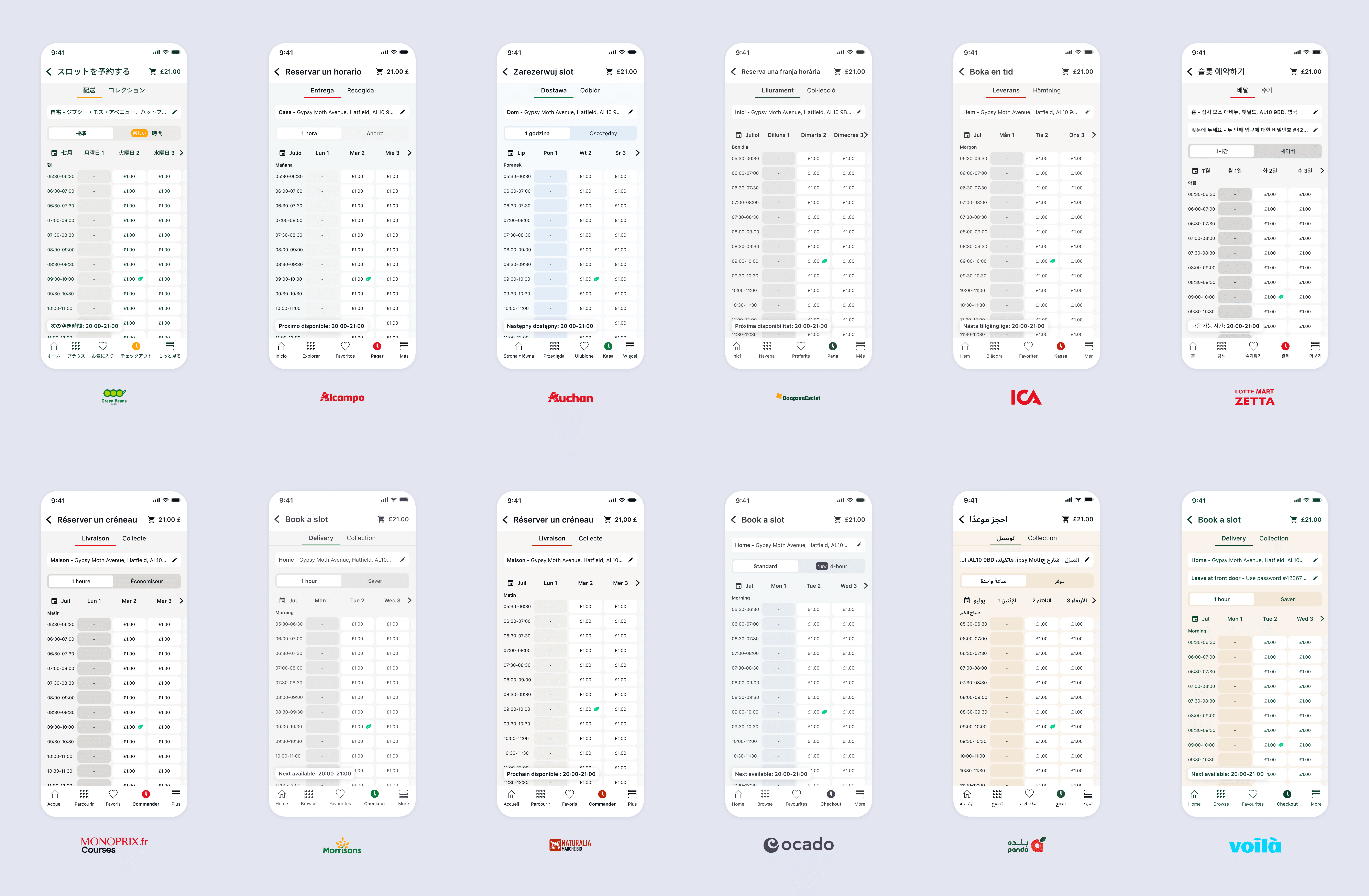
The redesign aligns with the organisation’s design language and sets a cross-platform standard for future checkout enhancements.
Reflection
This project reinforced the importance of designing scalable frameworks for high-impact, operationally critical flows. While users generally understood the slot booking process, the interface itself created friction that limited both conversion and the flexibility to introduce new delivery options.
Redesigning the page wasn’t just a visual update, it required balancing clarity, flexibility, and business impact. By establishing a flexible layout and clear delivery option pickers, we created a framework capable of accommodating multiple fulfilment methods without adding cognitive load.
Beyond the interface, the most valuable outcome was creating a repeatable approach for future enhancements. Testing at scale across partners allowed us to validate assumptions, refine layouts, and quantify impact, ensuring that design decisions translated directly into measurable business outcomes.
For me, the key takeaway was that high-impact checkout experiences demand systems-level thinking, where interface design, information architecture, and experimentation are tightly integrated to support both users and business goals.
Other projects
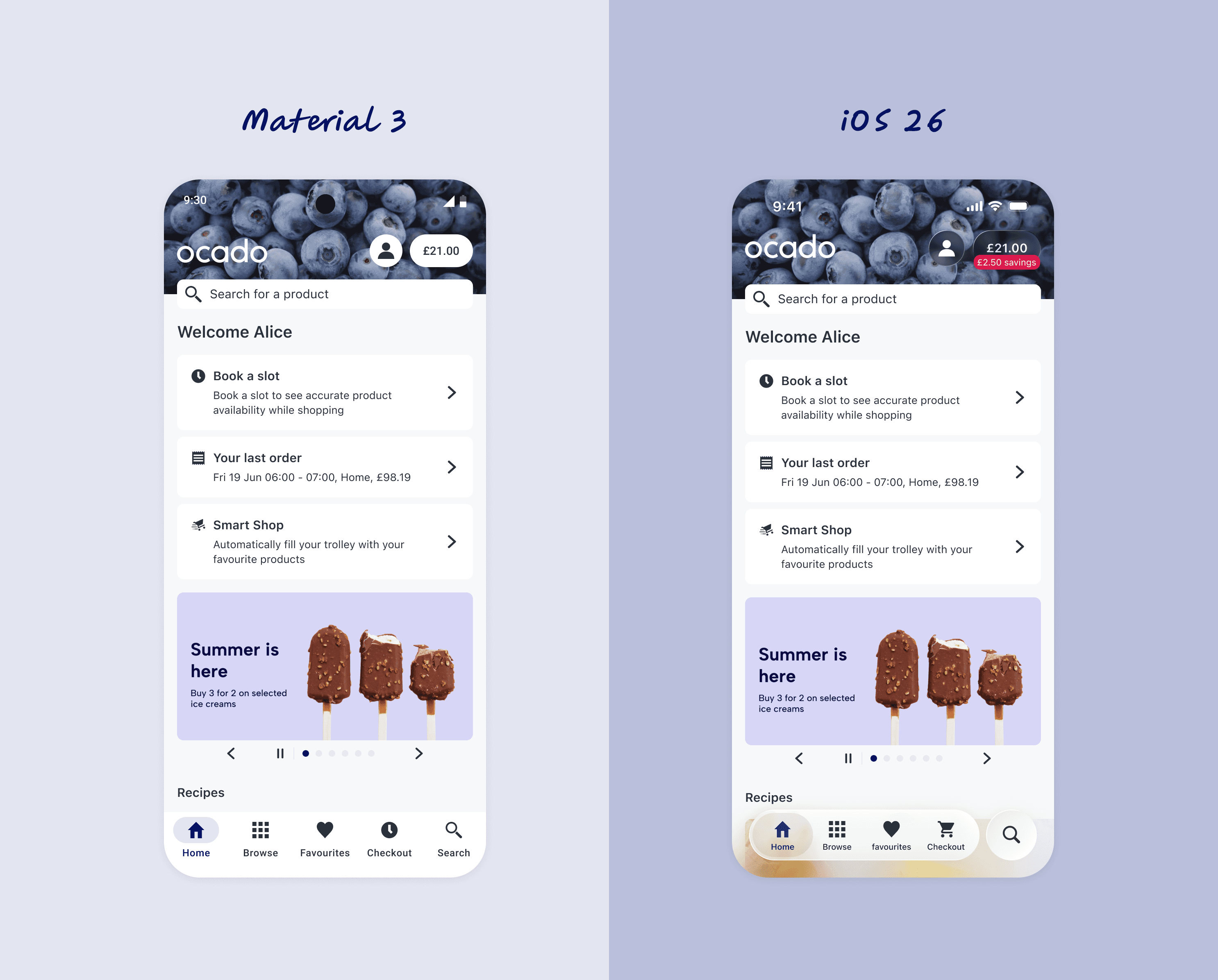
The "Native Renaissance"
Leading a UX-driven app redesign to replace fragile custom UI with native components, creating a maintainable, cross-platform experience that aligns with the design system and improves usability on iOS and Android.

Homepage Experimentation
Leading cross-functional experiments to embed A/B testing and data-driven decisions, delivering measurable results including a 33% increase in homepage add-to-cart rate and higher average checkout value.